Road to insanity..
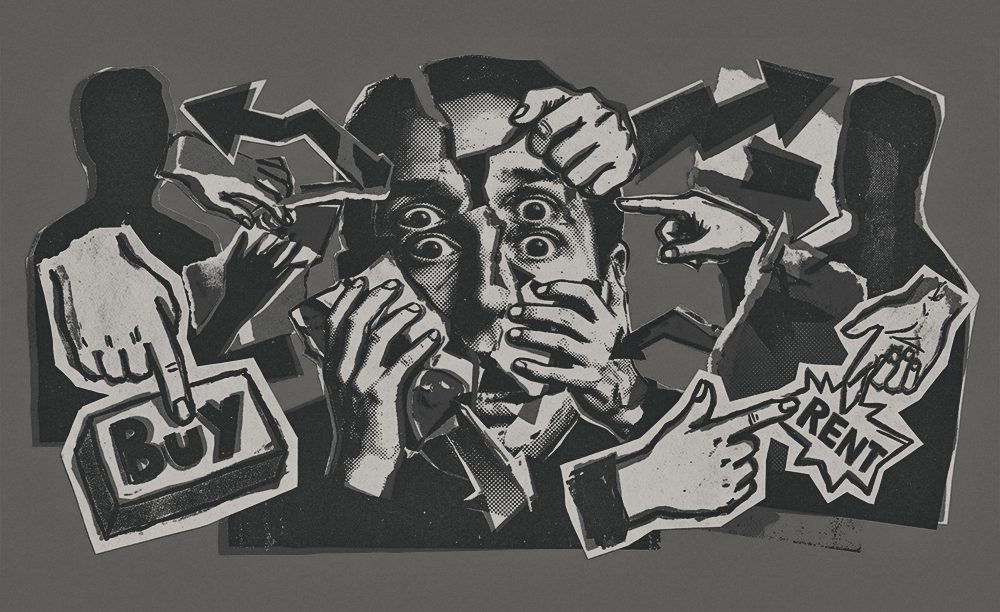
For decades, the concept of buying a video game was simple and universally understood. You walked into a store, picked up a boxed copy, and paid for it. What you received was ownership. ✅
The video game industry has undergone a fundamental shift that has quietly redefined what it means to “buy” a game.
Cartridges and discs were physical objects that belonged entirely to the buyer. They could be resold, traded, gifted, or even discarded without restriction. A game could sit on a shelf for years and still function exactly as it did on the day it was purchased. Ownership was complete, and with it came a set of rights that required no explanation.
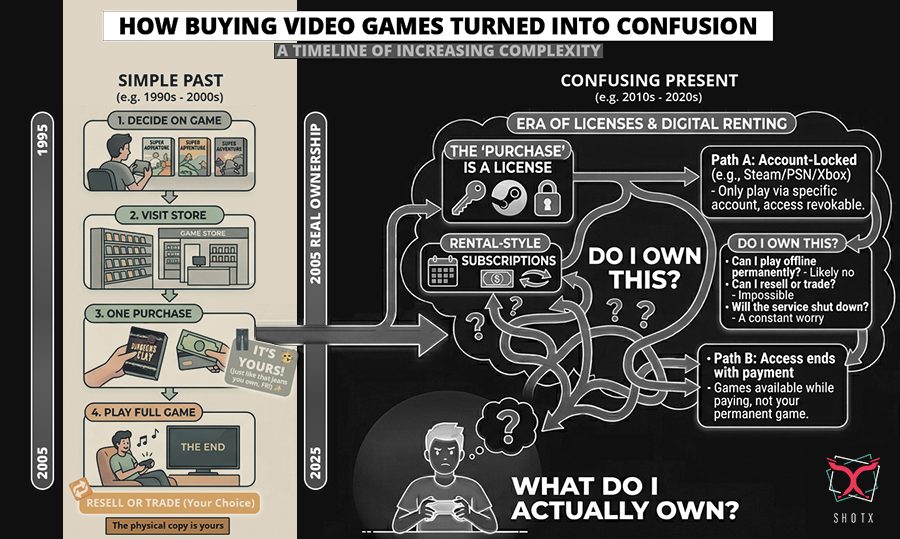
What do I actually own?
Steam continues to use the word “Buy,” reinforcing a long-standing expectation of ownership. Yet in reality, users are not purchasing games as property. They are acquiring revocable licenses, permissions to access software under specific conditions. If we’re going to keep that model we should at least be transparent with the wording and have a “Rent” button instead of “Buy”.
GOG.com stands as the closest modern equivalent to true game ownership, preserving the core freedoms of the physical era. By offering DRM-free downloads, it gives players full control. Allowing them to keep, back up, and use their games indefinitely without platform dependence. Unlike physical copies, digital files can be duplicated infinitely, which is why resale or transfer isn’t supported, but in practice, it still restores what “buying” once meant: permanence and real possession.
Meows!
At the same time, the broader industry’s strict licensing model continues to face strong opposition from users. Many players reject the idea that their purchases are merely temporary permissions 🤭 and this resistance has led to widespread unofficial behavior… account trading, resale, and gray or black market activity. 😥 While often against platform rules, these actions reflect a clear demand for real ownership, highlighting a growing divide between how digital goods are legally defined and how users believe they should function.
This model mirrored the broader understanding of property. Buying a book meant owning that book. Buying a pair of jeans meant they were yours to wear, lend, or give away. Video games were no different.
Today, games cannot be transferred, accounts cannot be legally resold, and access remains dependent on platform policies and continued service.
House of madness.
Today, that clarity has eroded. Despite this, user behavior has not changed.
The language used still relies heavily or solely on the word “Buy.” However, the transaction itself no longer grants ownership of the game. Instead, it grants permission to use it under specific conditions defined by the platform or publisher. These conditions can include restrictions on resale, limitations tied to user accounts, and the possibility… of revoked access!?
Let’s return to the fact that players continue to treat digital purchases as owned assets. Entire accounts being bought and sold through gray and black markets, directly violating platform terms. This is not an isolated issue, but a widespread response to a system that contradicts user expectations.
This creates a growing disconnect between expectation and reality. The result is a fractured marketplace.
Consumers continue to approach these purchases with the mindset shaped by decades of physical ownership. They expect what they used to expect. Yet what they receive is nothing like that. On one side, a legally structured model that denies ownership. On the other, a user base that operates as if ownership still exists. Between them, a growing ecosystem of unauthorized reselling, price distortions, and enforcement inconsistencies.
The comparison becomes even more striking when applied to everyday goods. Imagine purchasing a book, only to be told you cannot resell it, lend it, or even guarantee indefinite access to its contents. Imagine buying clothing that remains technically owned by the manufacturer, with your right to wear it subject to ongoing terms. Such scenarios would be widely rejected as unreasonable in any other market.
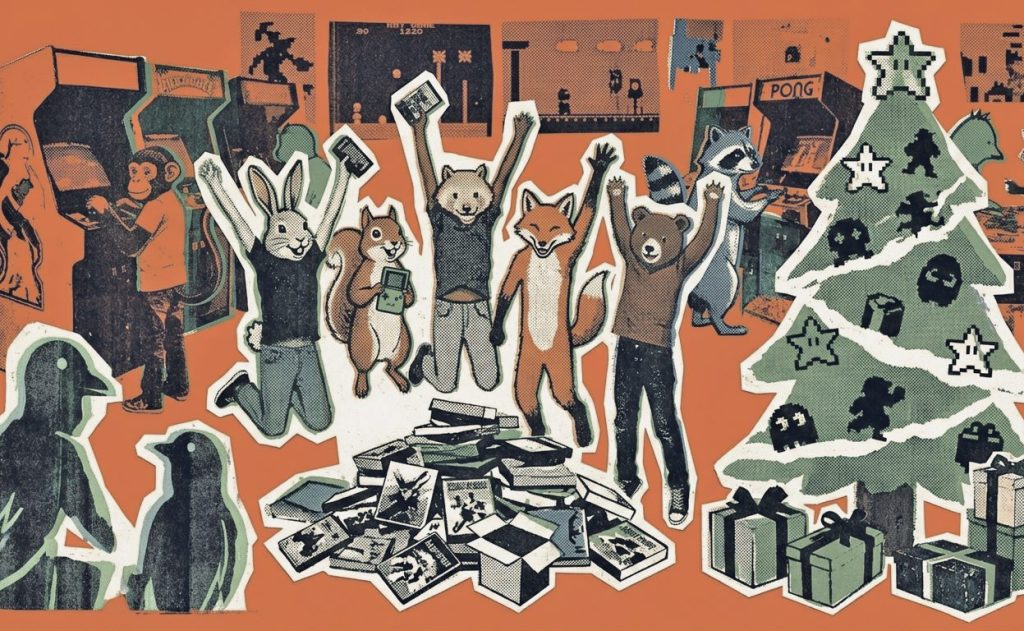
Living in the past.
One of the most immediate consequences of this shift is the erosion of personal collections. Physical game libraries once represented more than entertainment. They were archives of personal history. Shelves filled with cartridges and discs told stories of time, taste, and experience. They could be displayed, shared, and passed down. Digital libraries are not collections. They cannot be resold, inherited, or even guaranteed to persist indefinitely. What appears to be a personal archive is, in reality, a conditional list of access rights tied to an account.
Because if buying no longer means owning, then we should at least be using the “Rent” button.